Learning and Connecting at ClimateCap 2026
Category:
Student Voices
News
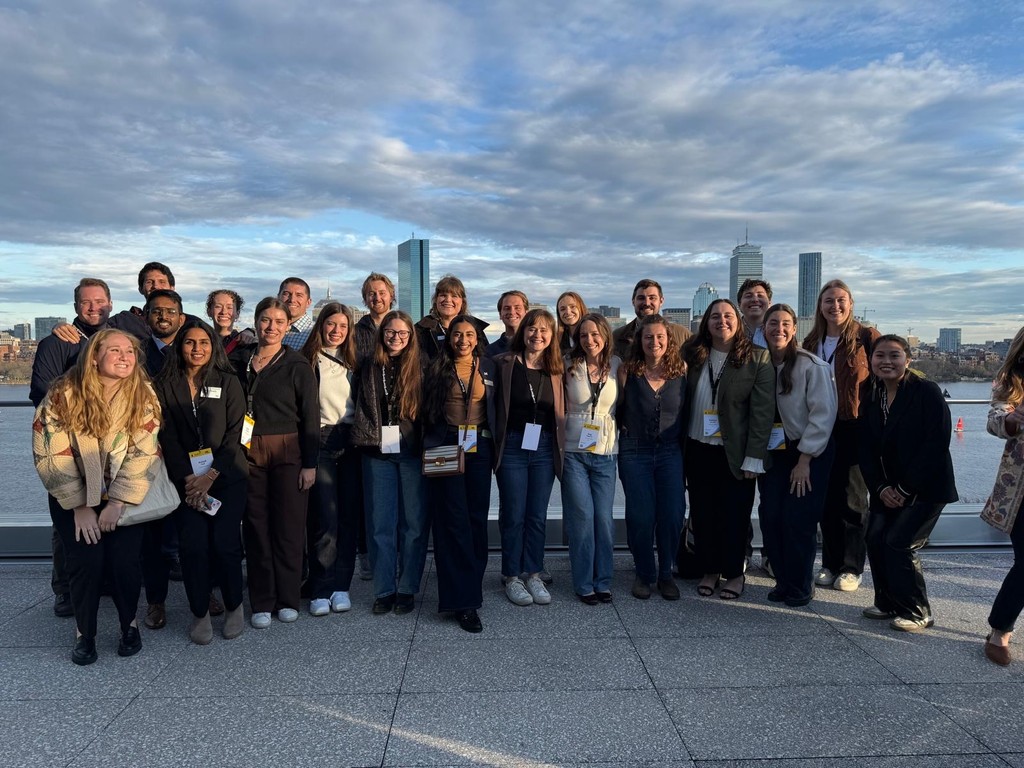
After attending ClimateCap in Boston, I left with a renewed sense of purpose that sustainability is not only a value in today’s business world, but also a mandatory risk factor that must be addressed head-on. The energy among MBA students and business leaders was present in every session I attended, and the sense of urgency and appetite for change energized me for the year ahead. Hearing how peers plan to embed environmental thinking into their careers, from finance to operations and policy, reminded me that leadership on these issues requires a holistic approach to business. Overall, the experience reinforced my commitment to pursuing my dual-degree MBA/MS to make a lasting impact on both the business community and our planet.
My first day began with an early flight to Boston and the opportunity to tour Greentown Labs, a climate tech incubator based in Boston with an additional operations in Huston. Greentown Labs is designed to support start up ventures that are laser-focused on solving climate-related challenges. While the runway for climate solutions can feel daunting, this tour opened my eyes to the power of collaboration and knowledge-sharing that emerges when passionate people are given the resources they need to succeed.
Navigating Tension in Climate Leadership
The next morning we were hosted by MIT at the Sloan School of Management, where author and director of the MIT Sloan Sustainability Initiative, Jason Jay, led a discussion on navigating tension in climate leadership. His key message: meet people where they are on climate topics. Leading with innate curiosity instead of assumptions helps you create a space for dialogue to understand what matters most to others and challenges you to examine your own biases. It was a grounding reminder that effective climate leadership is about human connection just as much as it is about policy or technology.
AI and Climate
From there we broke out into smaller sessions. Given my interest in AI and renewables, I attended panels on how AI is changing energy jobs and the current state of carbon markets. One of the most striking learnings from the AI jobs session was that companies are not rushing headfirst to adopt AI technologies but are instead taking careful and curated approaches. The framing of AI as a tool rather than a threat and the emphasis on intelligent AI use as a differentiating skillset sought after by energy employers helped me think more clearly about how to position myself for my summer internship working in renewable energy development.
The carbon markets panel focused on the technical inner workings of carbon markets and offered compelling insights into how they can be leveraged to reduce the steep costs of decarbonization technology. To close the conference, we listened to a lecture by MIT professor John Sterman, who modeled the projected growth of AI-related energy and water usage, and discussed the global warming potential due to the massive rise in energy demands for this technology. He noted that bringing the costs down will lead to increased consumer demand which creates a direct rebound effect. To me, this was the most impactful talk of the conference. His research blended a realistic view of how AI can help to drive efficiency, but underlined the harsh reality that AI alone cannot be a one stop solution for decarbonization.
My Takeaways
While I enjoyed learning about the climate tech startups in Boston, and hearing from business leaders and MIT professors, I felt that there was a lack of consideration for the social and human elements of climate change. While there was some acknowledgement and discussion about the current geopolitical backdrop, particularly the rising pressure of the energy crisis, I felt that they lacked a global humanitarian lens on the ramifications.
Overall, getting to spend time networking with other MBA students and learning about the integration of sustainability into their business curriculum was a refreshing change of pace. The path forward requires that sustainability is woven into every industry, role, and business decision. While there is lots of hard work ahead, ClimateCap reminded me that we are not pushing the boulder up the hill alone.